
The Battle Came Home to Put-in-Bay
213 years after the Battle of Lake Erie, the island’s place in the story reaches beyond Perry’s famous victory.
On September 10, 1813, a small group watched from the head of South Bass Island as warships fought in the distance.
One of those observers later described the battle unfolding about ten miles away. Smoke gathered around the vessels. Cannon fire continued for hours. From shore, the watchers could see enough to understand that something terrible was happening, but not enough to know who had won.
They waited until the following morning to learn the outcome, when they visited the fleet in the harbor.
For an island now so closely identified with Oliver Hazard Perry’s victory, it is a striking place to begin: with people standing on its shore, uncertain whether there would be a victory to celebrate. Early account published in 1814
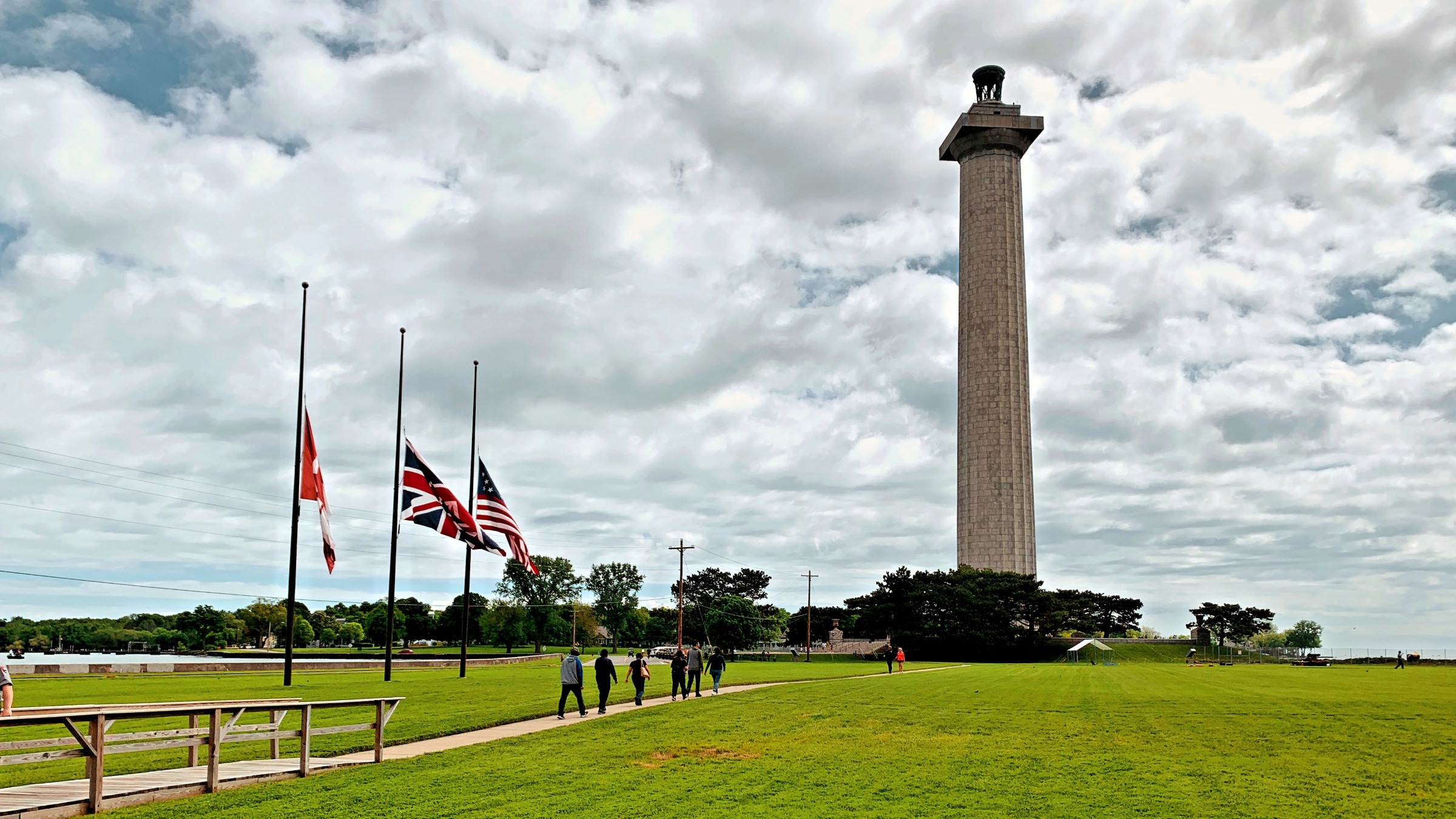
Today marks the 213th anniversary of the Battle of Lake Erie. At Put-in-Bay, that history is part of the view. Perry’s Monument rises above the harbor, familiar to people arriving by ferry, heading out on the water, or simply going about their day.
It can be easy to know the landmark so well that the afternoon behind it becomes distant.
That afternoon was desperate.
Perry had sailed from Put-in-Bay with nine American vessels to meet a British squadron of six. His flagship, Lawrence, absorbed devastating fire. With the ship crippled and much of its crew killed or wounded, he crossed in a small boat to Niagara and continued the fight.
The British squadron surrendered. Perry’s brief dispatch supplied the words that generations would remember: “We have met the enemy and they are ours.”
The victory secured American control of Lake Erie and forced the British to abandon Detroit. It also left 27 Americans dead and 96 wounded. Naval History and Heritage Command
Then the battle came back to the island.
The observer who boarded Lawrence the next morning found blood still on the deck and surgeons working among the wounded. His account moves abruptly from the spectacle seen offshore to suffering close enough to touch.
Put-in-Bay had been the place the squadron left behind. Now it was the place where the consequences of victory could be seen.
In the days after the fighting, crews from both sides participated in a funeral for fallen officers on South Bass Island. Accounts describe boats moving toward shore to funeral music, their oars keeping time, while guns sounded across the harbor. Americans and British shared the work of mourning. Early account
That moment belongs alongside the famous crossing to Niagara.
It helps explain why this history has such a deep place in the island’s identity. The battle happened offshore, but Put-in-Bay held its departure, its return, and its grief.
A century later, the memorial gave those memories a permanent place in the landscape. Its full name—Perry’s Victory and International Peace Memorial—holds together the achievement of the American fleet and the peace that eventually developed among former enemies. National Park Service
For islanders, remembering September 10 can begin with something as ordinary as looking across the harbor.
These are the waters from which the ships departed. This is the island to which they returned. Beyond the familiar shoreline, people once watched smoke obscure a battle whose outcome they could only hope for.
We know how it ended now.
On its anniversary, we can take a moment to remember what they could not yet know—and what the victory asked of those who brought it home.
Discover more from Put-in-Bay Daily
Subscribe to get the latest posts sent to your email.


