
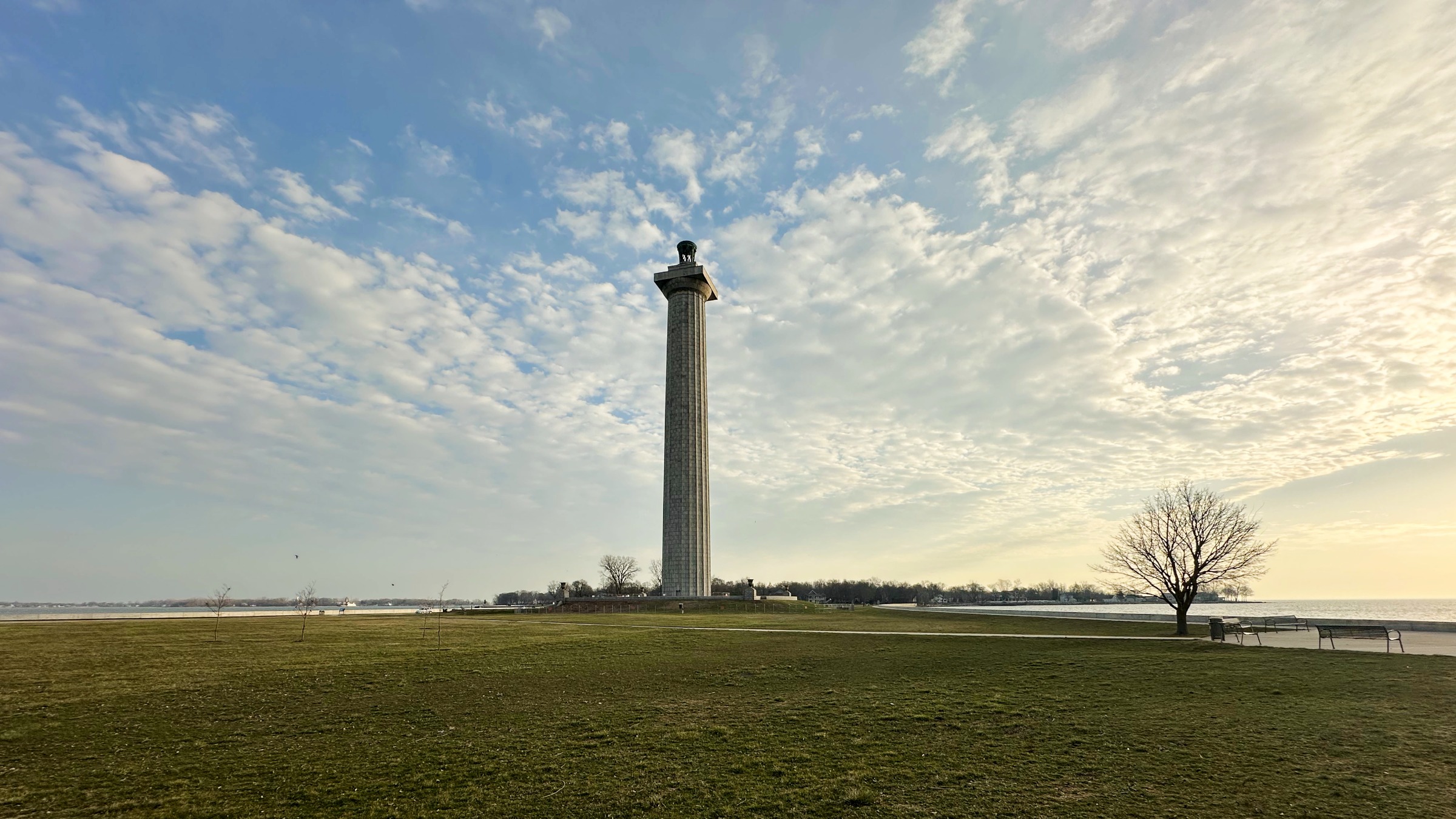
Century-Old Austrian Pines Removed from Put-in-Bay Monument Grounds
The removal of the Austrian pine trees at Perry’s Victory and International Peace Memorial this week has struck a chord across Put-in-Bay, as residents react to the loss of a landscape feature that had been part of the island for more than a century.
Crews were seen cutting down the trees on the monument grounds, drawing attention both in person and across social media, where locals shared memories, photos, and reactions throughout the day.
“Just heartbroken over these beloved Austrian Pines,” wrote one resident.
Others shared more personal memories tied to the trees.
“I remember playing hide and seek at the monument as a kid,” another local wrote. “My brothers would climb in the trees… I never found them.”
For many, the trees were simply part of growing up on Put-in-Bay — something that had always been there.

Credit: National Park Service Photo Archive / Otto G. Herbster
A Landscape Rooted in History
While the trees felt timeless, their origins are well documented.
According to planning documents from the National Park Service, the Austrian pines were planted in 1925 as part of the monument’s early landscape development, about a decade after the monument itself was completed in 1915.

Credit: National Park Service
Originally, around 40 Austrian pines were installed as part of a formal design intended to frame the base of the monument and shape the surrounding grounds. The trees were even maintained in a clipped, conical form early on, reinforcing the structured, intentional layout of the site.
Over time, that landscape evolved.
In 1934, a portion of the trees were removed after they began to interfere with lighting used to illuminate the monument at night. Others remained, growing naturally over the decades into the larger, more organic forms familiar to residents today.
By recent years, approximately 15 of those trees were still standing — not just as scenery, but as recognized historic landscape features tied to the monument’s early design.
Why the Trees Were Removed
An official explanation has not yet been released by the National Park Service.

However, a worker at the monument indicated the Austrian pines were diseased, which aligns with known issues affecting the species as it ages. Austrian pines are commonly impacted by decline and disease over time, particularly in older plantings.
Put-in-Bay Daily has reached out to park officials for confirmation and additional details, including whether replacement trees are planned.
A Change to a Familiar View
The removal marks a noticeable shift at Put-in-Bay’s most recognizable landmark.
Beyond their historical role in the monument’s design, the trees had become part of the island’s shared experience — from childhood memories to graduation photos, to quiet moments beneath their branches.
“And the wind through those pine needles…” one resident wrote.
For some, the change is difficult to process, even with an understanding of why it happened.
“I went down and got some pinecones,” another local shared. “Just to have something.”

What Comes Next
The tree removal also comes as the monument prepares for a major preservation effort expected to take place in the coming years. It is currently unclear whether the removal is directly tied to that project or part of a separate vegetation management plan.
Put-in-Bay Daily has reached out to park officials for additional details, including whether new trees will be planted and how the landscape may change moving forward.
For now, the absence of the Austrian pines represents both a physical and emotional change — the loss of a century-old feature that helped define the monument grounds for generations.
Historic information sourced from National Park Service planning documents.
Discover more from Put-in-Bay Daily
Subscribe to get the latest posts sent to your email.


